SigEp Safety
I founded SigEp Safety, creating a sober monitor training program, developed with ER doctors and sororities, that was adopted campus-wide and significantly reduced medical incidents at Stanford Greek events.
The Problem:
Fraternities are historically extremely dangerous places. Rates of sexual assault are significantly higher within Greek Life than elsewhere on college campuses. As a new member in Sigma Phi Epsilon (SigEp), I had a dilemma - I loved the community, but refused to live in a place rife with sexual violence. I realized, change does not occur unless someone drives that change.
The People:
I started by listening. I went to sororities, who are typically at highest risk of sexual violence in Greek Life, and listened. After hearing about what makes them feel unsafe, uncomfortable, or even just weird in our space, I went to medical professionals. I learned where problems were, how to support those who felt uncomfortable, and how to respond to medical emergencies consistent with college parties. I began working closely with Stanford’s Title IX office (SHARE), sexual violence prevention advocates, and peer educators to ensure our approach was aligned with trauma-informed practices. One insight stuck with me: safety is not the absence of danger - it’s the presence of care.
The Prototypes:
I redesigned every touchpoint of safety, from the pre-party checklist to in-the-moment interventions. I built out two cornerstone trainings:
Sober Monitor Training (2023 Edition):
A direct, no-fluff guide on how to keep people safe. I made it brutally clear what to look for (over-intoxication, unresponsiveness, injuries, and boundary violations), how to intervene without escalating, and how to prioritize guests' comfort, especially women’s, over social awkwardness or ego. I incorporated harm reduction strategies like Narcan administration, designated recovery areas, and friend location protocols. I even included simple but impactful shifts, like publicizing what sober monitors would wear and ensuring phone numbers for help were posted in the house.
Title IX + Consent Training:
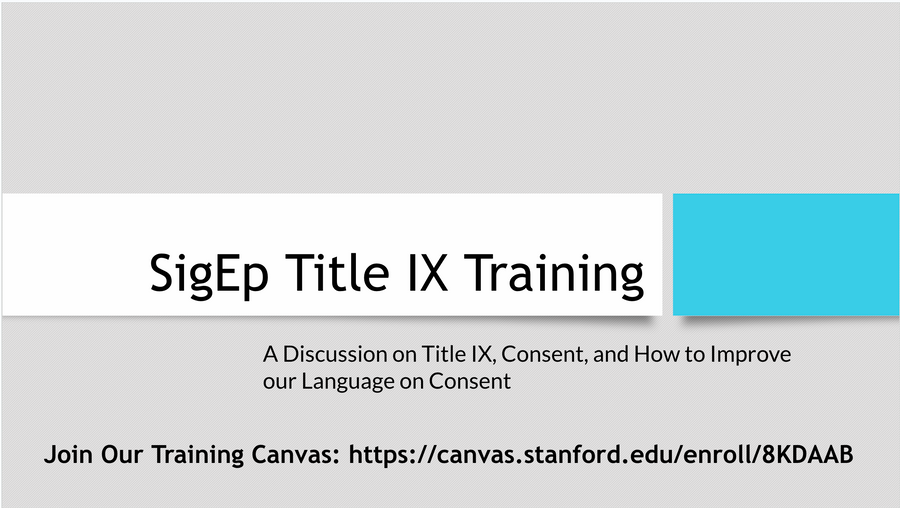
Instead of the usual slideshow, I developed interactive, discussion-based workshops centered around values like respect, empathy, and trust. I reframed consent using the “Pizza Model”, an ongoing, collaborative conversation, and encouraged participants to explore their own boundaries and sources of pleasure through journaling and small-group conversation circles. These spaces invited vulnerability and built emotional literacy, which is often missing in male spaces.
I introduced anonymous reflection prompts, community agreements, and post-training discussions that encouraged fraternity members to internalize, not just memorize, the principles behind our policies.
The Solution:
SigEp Safety is a culture-first safety program that reimagines what it means to be a brother, a host, and a community member. It combines practical protocols with values-driven training, empowering sober monitors to act not just as rule enforcers, but as caretakers and protectors of our space.
Our approach has been adopted by multiple Stanford sororities as a best-practice partner standard, and helped reframe SigEp’s position within the broader Greek life community, as a chapter that doesn’t just “comply,” but leads. On top of this, Stanford's SHARE office incorporated the new trainings I built, fixing prior failings in trainings and safety systems.
I've had many women on campus come to me to talk about SigEp's safe presence, saying, "You can drink other places on campus, at SigEp you know someone makes sure you get home afterwards." It’s a culture. And it’s one we’re proud to build.
Photos of the Journey


